Spoke Rehab

Up-Cycled Art        As usual, Conservation was on hand to document the condition of the newest addition to the courtyard. As an added bonus, we got to chat with the artist, A. Balasubramaniam, a.k.a. Bala. While taking photos, I saw that the sculpture is made up of small rods of metal welded together. I noticed shallow threads on a few of the pieces of metal and asked Bala if he had welded nails together.

In fact, he told me, the sculpture is made of bicycle spokes. Nice! The spokes are cut up and welded together into the repeating triangle pattern that makes up the structure of the artwork. Bala said he chose bicycle spokes because they are light-weight and have some flexibility. It’s true; if you look at the base of the sculpture, you can see that the convex shape inverts and pushes inward where it rests on the flat slate pavers of the courtyard.

A detail of the cut and welded spokes. Photos: Patti Favero

Minor Repairs        The sculpture came to the Phillips from India after a long journey by truck and by sea. As we noted its condition, we found that one branch on the inside of the sculpture had snapped almost in two. A few weak spots at the base of the branch had given into metal fatigue somewhere along the way and did not survive the trip. Bala took it all in stride, and he and the Phillips’s Installations Manager, Bill Koburg, went on a fishing expedition with some copper wire and a picture hook. They snagged the branch with the picture hook and carefully pulled it up, aligning the break as well as possible. Bala and Bill then secured the broken branch in its proper position using monofilament, or fishing line (rated for 15 lbs).  I fetched some acrylic paint from the studio, which Bala used to tone the fishing line so it would be less noticeable.

Left: The break at the base Center: Bala's hand, carefully lowering the hook Right: Bala and Bill making the repair

Notes from the Studio: Discoveries During Treatment

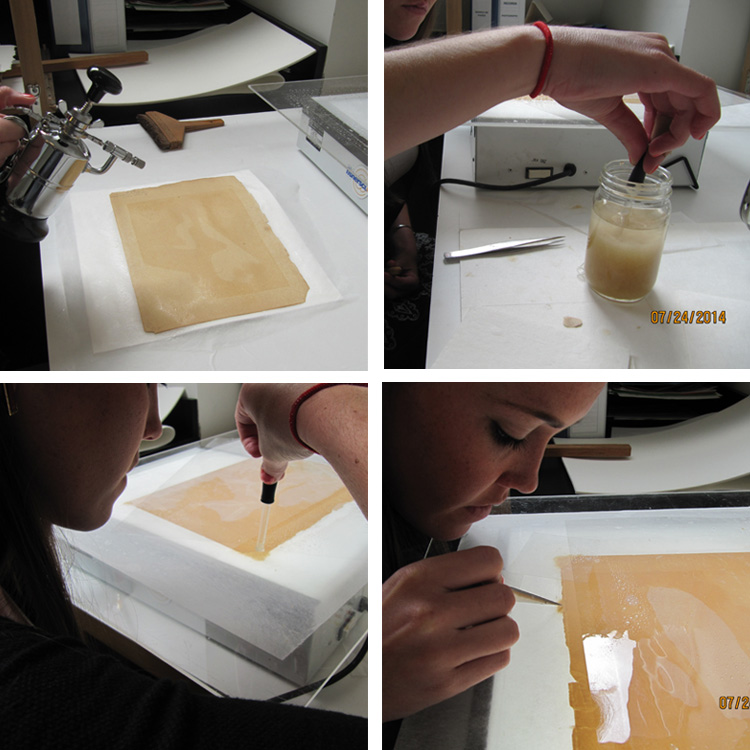
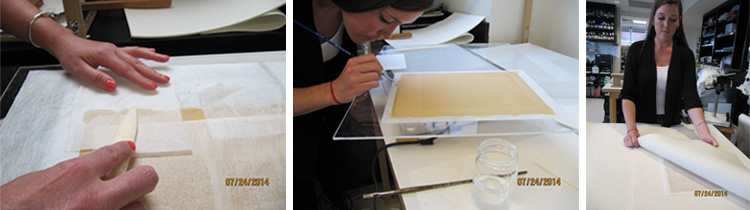
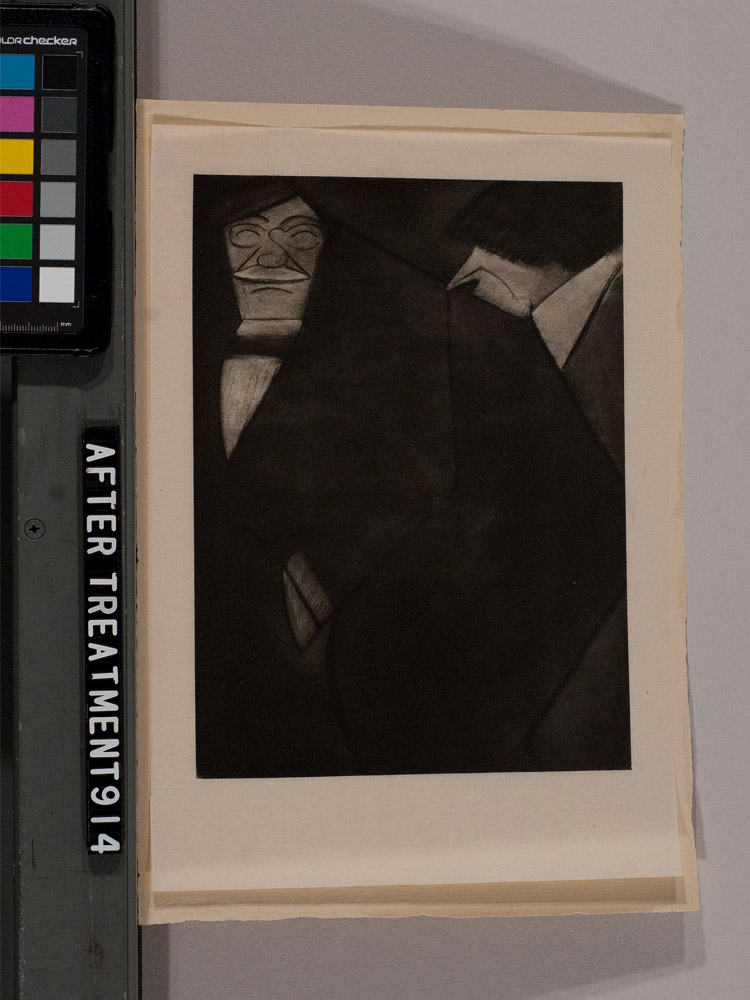
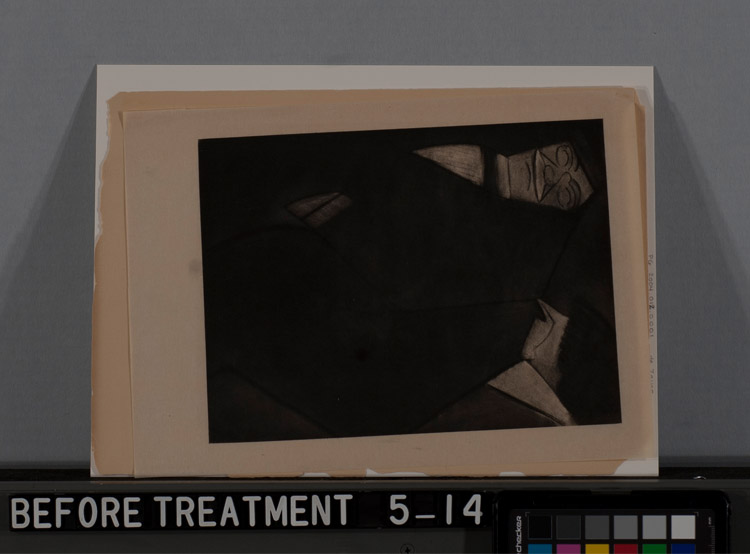
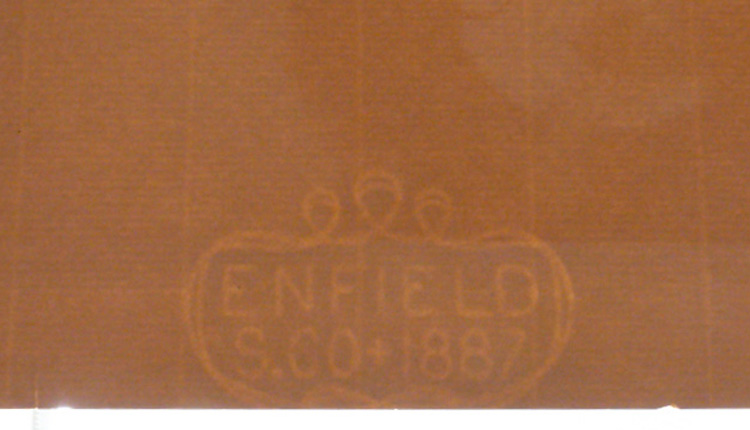
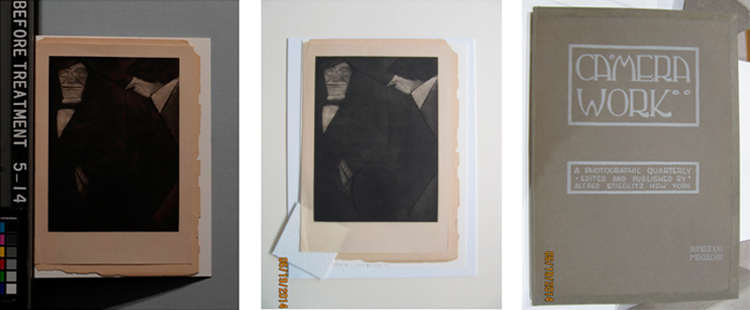
Sometimes the small discoveries are the most fun.  Recently in the conservation studio, removal of an acidic backing from a watercolor by William Zorach revealed vintage advertising and, even better, an additional signature by the artist.

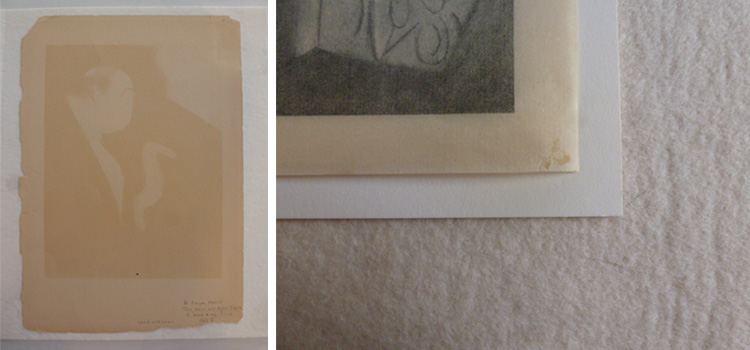
Recto (front), before treatment. William Zorach (b. Eurburg, Lithuania, 1887; d. Bath, Maine, 1966). New York Harbor, 1923. Watercolor on Paper. 15 1/4"x21 1/2" signed and dated, bottom right corner

Recto (front), before treatment. William Zorach (b. Eurburg, Lithuania, 1887; d. Bath, Maine, 1966). New York Harbor, 1923. Watercolor on Paper. 15 1/4"x21 1/2" signed and dated, bottom right corner

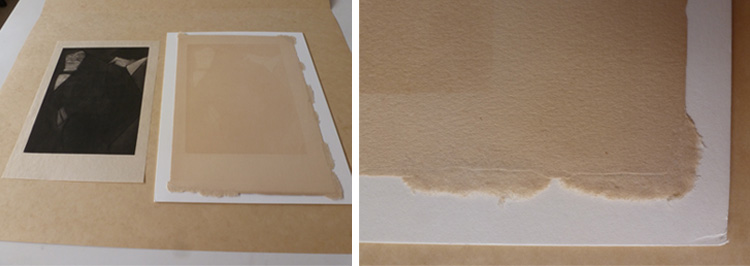
Verso (reverse side), seen before removal of the acidic backing.

Verso (reverse side), seen before removal of the acidic backing.

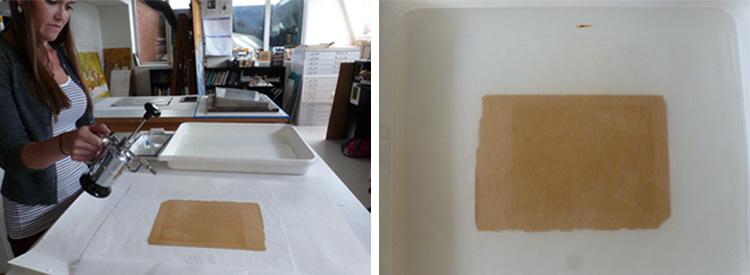
During Backing Removal

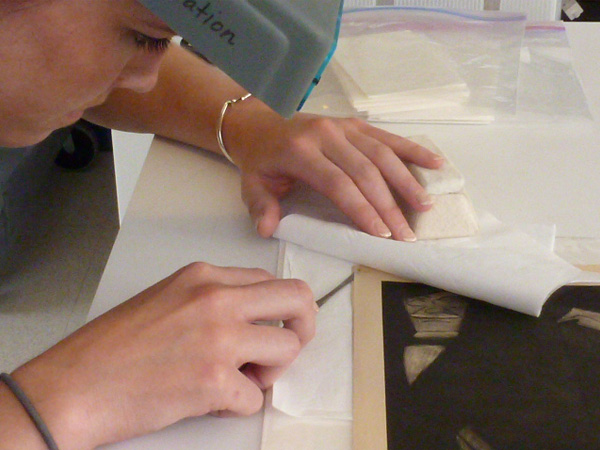
During backing removal: The backing turned out to be a vintage advertisement, c. 1920's, for "Goodrich Hi-Press Rubber Footwear" with the slogan, "With the RED LINE 'round the top."

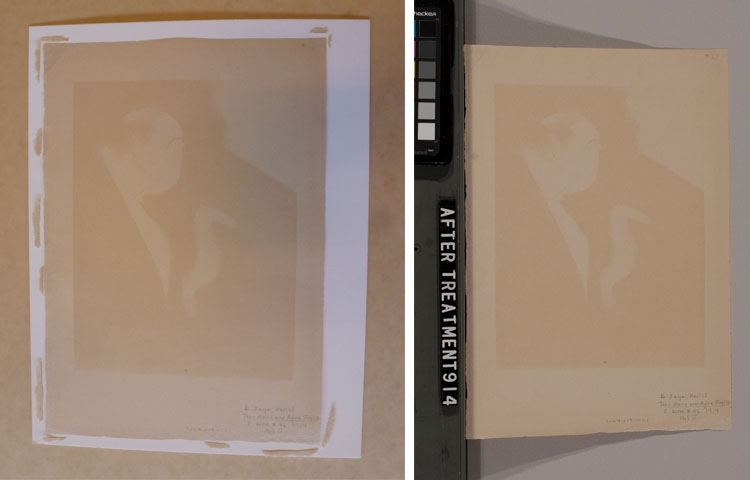
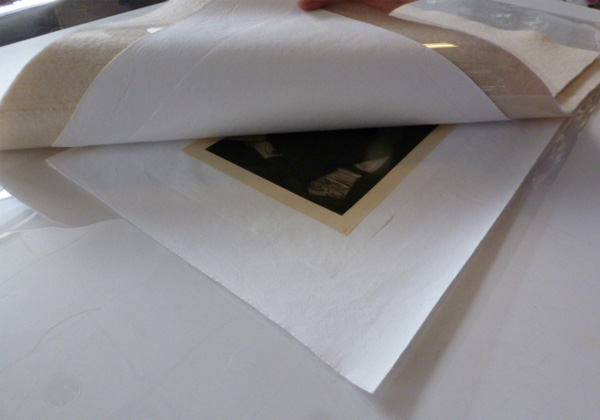
Zorach After Backing Removal

After backing removal: The treatment revealed another signature by the artist on the back of the watercolor, in the top left corner - seen in the detail at left


Conservation Maintenance of Outdoor Sculpture

Conservators clean Barbara Hepworth's Dual Forms. Photos: Sarah Osborne Bender

On Monday, conservator Lilli Steele and sculpture conservator Constance Stromberg washed and waxed our Barbara Hepworth sculpture, Dual Form, located in the Hunter Courtyard.

Constance describes the process:

After washing with water and mild detergent then rinsing and drying with soft cloths, we apply wax to the bronze as a protective coating (so we don’t remove it). It wears off with time especially where the bronze gets a lot of sun, rain, and wind abrasion. On the first day of this two day process, we wipe off just the upper layer of old wax to remove embedded particulate dirt before applying fresh wax. The following day, we buff the surface with soft cloths after the wax has a chance to harden.

Conservation maintenance on outdoor bronzes should be done every 18 to 24 months to protect the surface, and in between there should be periodic washing two or three times per year to rinse off pollen and airborne particulates.

Before cleaning (left) and after (right). Cleaning is especially evident on the base and under the round opening. Photos: Constance Stromberg

It was interesting to learn that Constance has worked on four other Hepworth sculptures and considers her work to be among her favorites.