International Women’s Day : Women Artists at the Phillips

Despite being a pioneer in his collecting of modern art, Duncan Phillips did not extend his exploration of the non-traditional to women artists. They make up a small percentage of the works he and his wife, Marjorie, collected as well as the works added since. 2008 Postdoctoral Fellow Jennifer T. Criss attempted to identify why women are so underrepresented in the collection, but the question is difficult to answer. She concluded that Phillips valued the power of an individual work above all else, favoring a painting’s ability to produce an emotional reaction in the viewer above other qualities or associations. So while Duncan’s partnership with Marjorie or his personal reliance on women in his business life (to be explored in blog posts later this month) did not result in the rich collection of women artists that one might hope, there are some very strong and wonderful works by women at the Phillips. Below is a selection of works that were acquired by Duncan Phillips. Updated: Read a post on Phillips’s powerful secretary, Elmira Bier.

Theresa Bernstein, Girlhood, 1921, Oil on canvas

Theresa Bernstein, Girlhood, 1921. Oil on canvas, 29 x 35 1/8 in. Acquired 1924. The Phillips Collection, Washington, D.C.

Isabel Bishop, Lunch Counter, circa 1940, Oil, egg tempera and pencil on hardboard

Isabel Bishop, Lunch Counter, c. 1940. Oil, egg tempera and pencil on hardboard, 23 x 14 in. Acquired 1941. The Phillips Collection, Washington, D.C.

Laura Douglas, Symphony No. 2, Charleston, 1934, Gouache and ink on paper

Laura Douglas, Symphony No. 2, Charleston, 1934. Gouache and ink on paper, 17 3/4 x 23 5/8 in. Acquired 1942. The Phillips Collection, Washington, D.C.

Loren MacIver,  New York, 1952, Oil on canvas

Loren MacIver, New York, 1952. Oil on canvas, 45 1/4 x 74 in. Acquired 1953. The Phillips Collection, Washington, D.C.

Paul Gauguin’s Healthy Advice

Paul Gauguin, The Ham, 1889, Oil on canvas

Paul Gauguin, The Ham, 1889 (detail). Oil on canvas, 19 3/4 x 22 3/4 in. The Phillips Collection, Washington, D.C. Acquired 1951.

A brief story in the Washington Post about the health value of onions (“nutritional powerhouses” according to Runners World magazine) made me think of one of my favorite works in the collection. Those little onions in Paul Gauguin’s painting The Ham (1889) set next to the slab of ham have long been the subject of folk lore and even folk  medicine. According to the article, onions “help protect the brain, keep the heart healthy, strengthen bones, reduce cancer risk and aid digestion.” The rosy pink color of Gauguin’s onions indicates that they are likely Roscoff onions, a distinctive and popular crop in Brittany,  historically sold by men called Onion Johnnies, who hung bunches of onions by their braided stalks from the handles of their bicycles.

Lisa Leinberger, Volunteer Coordinator

Unexpected Opportunity: Ab Ex on View

Valerie Hellstein in Gallery F. Photo: Sarah Osborne Bender

Valerie Hellstein in Gallery F. Photo: Sarah Osborne Bender

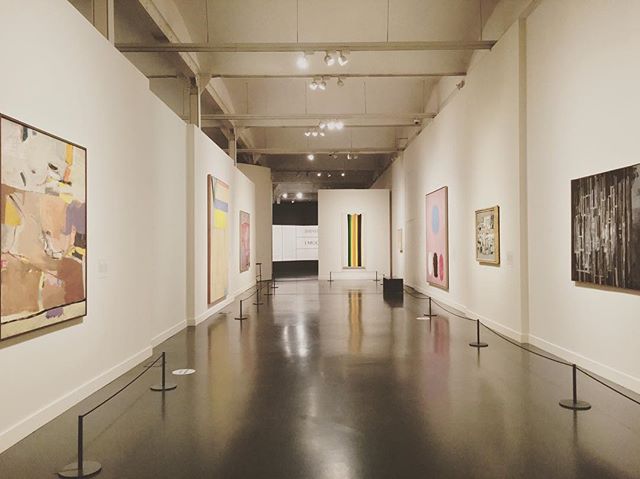
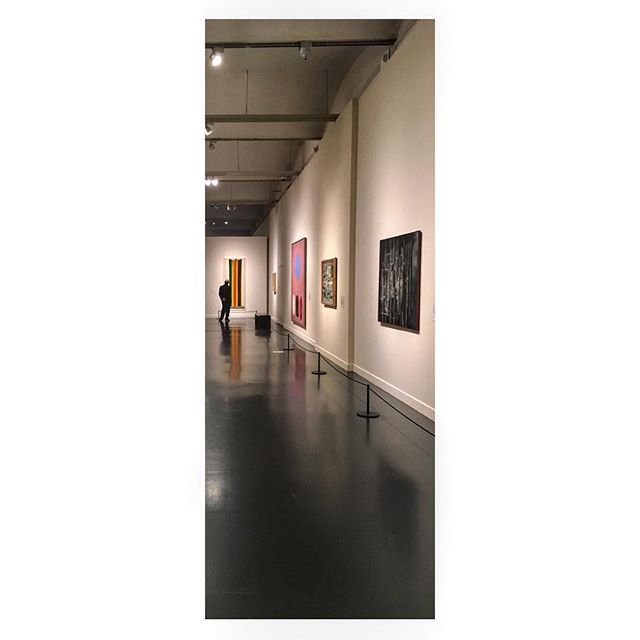
One of the things that excited me about coming to the Phillips for the year was the opportunity to be in a museum setting again, to have art objects near by and all around. Knowing that my fellowship was a research and teaching opportunity, however, I did not expect to get first-hand experience working with the collection. I tentatively suggested the possibility of installing a few abstract expressionist works in a gallery, and the curators and staff were more than enthusiastic and supportive. Fortuitously, the small hang coincides with the newly opened exhibition Angels, Demons, and Savages: Pollock, Ossorio, Dubuffet and shows how other artists in Pollock’s and Ossorio’s circle explored process and materiality as well as engaged themes of nature, landscape, and even spirituality.

What I found challenging and exciting about this small project is that many of the works I had hoped to choose were unavailable, but my disappointment was quickly mitigated by how well the group of paintings selected in the end works together. Seeing the affinities between Tomlin and Ippolito, Kline and Stamos, Siskind and de Kooning, is very exciting. Duncan Phillips felt that paintings could talk to each other and different pairings could teach us something new and unexpected. While it makes sense from a historical and social perspective to have these paintings in the same room, seeing the various combinations and affinities has made me look at the works in a new light. My scholarship tends toward intellectual and cultural history, and it is refreshing and important to be brought back to the physical works of art as I dive into writing my book manuscript.

Valerie Hellstein, Postdoctoral Fellow

Installation photos: Joshua Navarro

Installation photos: Joshua Navarro