The Artist Sees Differently: Caroline Hoover

Caroline Hoover helping out in the Phillips' Conservation studio. Photo: Joshua Navarro

Caroline Hoover, Museum Assistant, Conservation Intern

How did you learn about the Phillips?

I learned about the Phillips because my great aunt [Elizabeth Turner] used to be a curator here. At the time, we came up to see her shows and visit the Phillips.

Do you feel you are inspired by the Phillips art?

I would say that I’m inspired by the Phillips art; there is a lot to take from the works in terms of formal technique in a lot of the older impressionist works and creativity and innovation found in the new works by contemporary artists.

What do you listen to as you create?

I always listen to music when I am painting, but honestly it depends on the mood I’m in, and I usually switch genres a few times before I’m satisfied.

Who’s your favorite artist in the collection?

Edgar Degas

What painting in the collection do you wish you’d painted?

Pierre Bonnard’s The Riviera

Do you collect other artwork – or anything?

When I studied abroad in Europe and Africa, I collected artwork from a lot of the countries I visited. A lot of it was street artwork, but also some from galleries. I usually collect at least a postcard of works that I especially like in other collections/museums.

And do you have a favorite Marjorie Phillips painting?

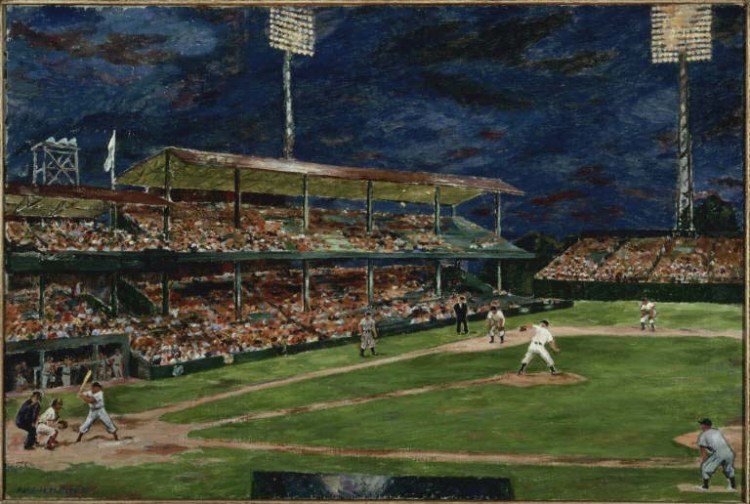
To be honest, the only one that I’ve seen is Night Baseball. But, I do like that one a lot.

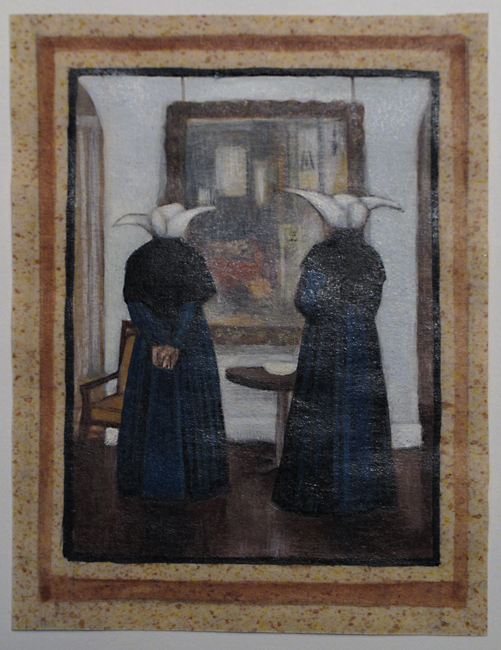
Caroline Hoover, "Untitled," oil on canvas, 3' x 4'

Caroline Hoover, "Untitled," oil on canvas, 3' x 4'


Happy Birthday Marjorie Phillips

Marjorie Phillips, Self-Portrait, circa 1940. Oil on canvas, 20 1/2 x 16 1/2 in. The Phillips Collection, Washington, D.C. Gift of the artist, 1985.

The impact of Marjorie Phillips (1895-1985) on the spirit of The Phillips Collection is clear when one dips into her husband’s correspondence. In letter after letter from artists such as Pierre Bonnard, Alfred Stieglitz, John Marin, and Arthur Dove, Marjorie’s gracious presence and passion for art is commented on with appreciation. Seemingly always at her husband’s side, when not in her studio, she brought a true painter’s sensibility to Duncan’s lifelong exploration of artistic expression.

Taking over directorship of the museum after Duncan died in 1966, Marjorie filled a more substantial curatorial role than she had in the past, mounting two large and unique shows that year.

Birds in Contemporary Art explored works in many media and a wide range of representational style from Chaim Soutine to Morris Graves to Constantin Brancusi. Featuring a large number of sculptures, the show resulted in the purchase of one of the museum’s still most-loved works, Alexander Calder’s Only Only Bird (1951).

Marjorie's handwritten notes on selections for her show, Birds in Contemporary Art, 1966. From Phillips Collection Archives.

Installation shot of Birds in Contemporary Art, 1966, featuring works on the left by Morris Graves, Georges Braque's Oiseau on the right wall, and sculpture by Constantin Brancusi, Jean Arp, and Leonard Baskin. Photo from Phillips Collection Archives.

Following this exhibition, Marjorie opened the museum’s first show of outdoor sculpture featuring works by Alicia Penalba in the newly formed courtyard. In an oral history interview in 1974 with Paul Cummings, Marjorie described discovering Penalba in a New York gallery and buying a piece of her work. Likely a bigger champion of sculpture than her husband, she had asked him for an outdoor space at the museum for exhibitions. In the Sunday Star on September 25, 1966, reviewer Benjamin Forgey gave the Penalba show a very positive review.

The former courtyard with exhibition of outdoor sculpture by Alicia Penalba, 1966

Phillips Flashback: October 20, 1924

Duncan and Laughlin Phillips, late 1920's, standing on Q Street NW, the Phillips Memorial Gallery behind them to the left. Photo from Phillips Collection Archives.

A son, Laughlin Phillips, is born to Duncan and Marjorie in Washington D.C. Laughlin, named after his paternal grandmother’s family, will go on to be a foreign service officer, a founder of Washingtonian magazine, and director of his family’s museum, taking over from his mother in 1972 and serving for 20 years. It is Laughlin who will formalize the business of the museum from a small family-run collection into an internationally positioned institution.